
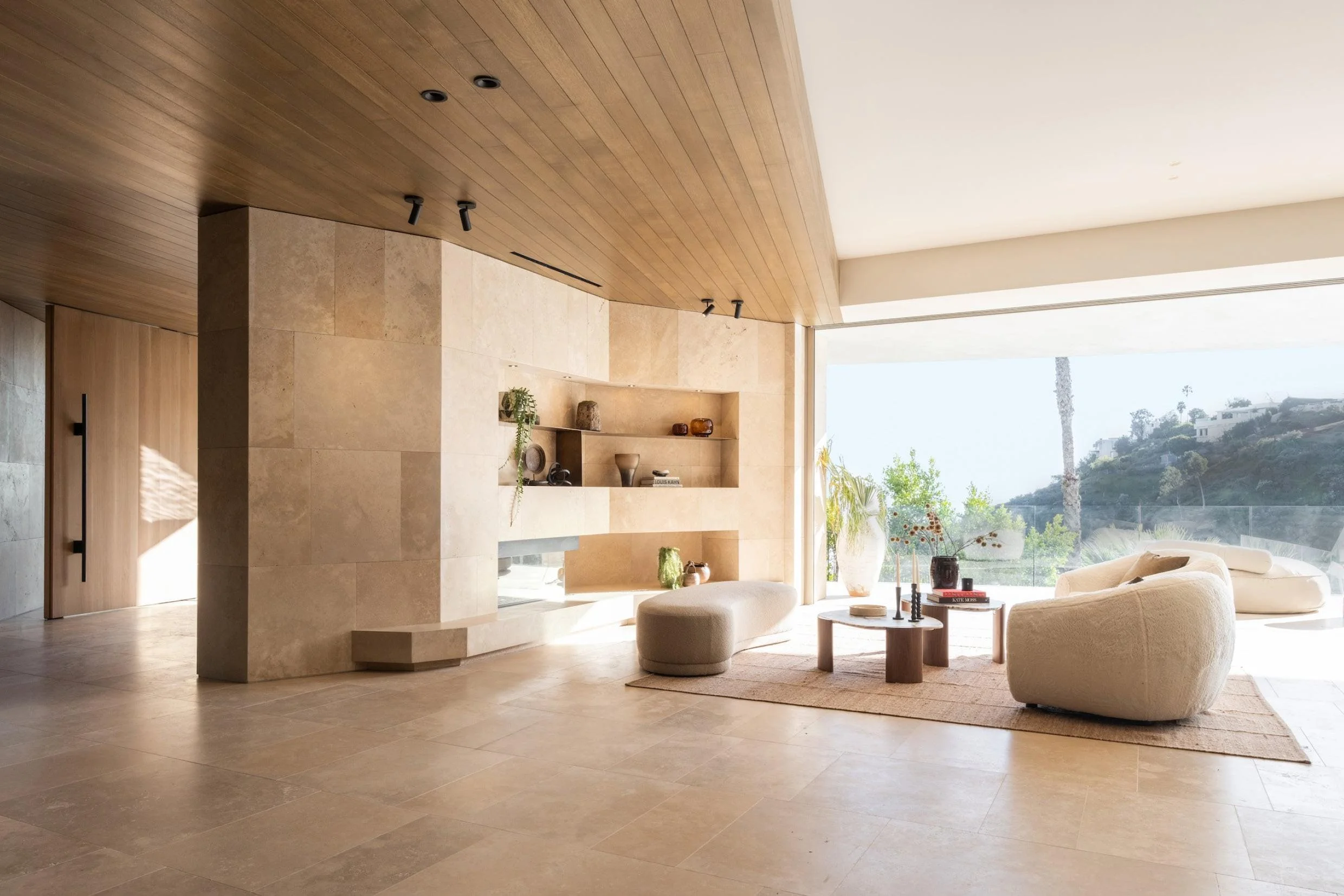
what makes an interior design website effective?
An effective interior design website combines a curated project portfolio, clear service positioning, useful project stories, a credible studio profile, a transparent design process and a simple enquiry journey. It should reflect the quality and personality of the studio while remaining fast, accessible, easy to navigate and straightforward to update.
. Build a portfolio that tells a story, not just a gallery
The portfolio is often the first place a prospective client goes after landing on an interior design website. A grid of attractive images is useful, but it may not explain the thinking behind the work. Visitors need to understand more than how a finished room looks. They need to see the type of challenge the studio can handle and the experience it can bring to a new project.
Curate projects around the work you want next
Choose projects that represent the studio’s current direction, strongest capabilities and preferred client profile. If the studio wants more boutique hospitality work, make relevant hospitality projects easy to find. If it specialises in high-end residences, lead with residential work that demonstrates the right scale, detail and design approach.
A smaller, carefully selected portfolio can communicate a clearer position than a large archive containing unrelated projects. Do not remove older work simply because it is old; review whether it still represents the quality and services the studio wants to sell.
Give important projects their own pages
Each featured project can become a concise case study. Include the project type and location where client permissions allow; the client brief or design challenge; the concept or design direction; important materials, spatial decisions or details; a considered selection of finished photographs; and the scope of the studio’s involvement.
This context helps a visitor understand the work rather than simply scroll past it. It also gives each project page a distinct subject that can be described accurately in its page title, headings and image alternative text.
Respect client privacy and image rights
Not every residential client will want their address, family details or full property layout shown publicly. Confirm permissions before publishing project photography, plans, names or testimonials. Where necessary, describe the project broadly—for example, “Private residence, London”—without revealing identifying details. Use images the studio has permission to display and credit photographers where required.
2. Make your studio positioning clear within the first screen
A visitor should not have to inspect ten projects to understand what the studio does. The first screen of the homepage should communicate three things: the type of studio, the kind of spaces or projects it handles, and the experience it aims to deliver.
For example, a studio might position itself as “Residential interior design for considered, contemporary homes in London and the South East.” A hospitality-focused practice might say “Interior concepts and full-service design for boutique hotels and restaurants.” These are examples, not claims to copy; the wording should reflect the studio’s actual services and location.
Pair the headline with one strong, relevant image and a clear next step such as “Explore our projects” or “Discuss a project”. Avoid vague statements that could describe almost any design business. Specificity helps prospective clients decide whether they are in the right place.
3. Create service pages around what clients need
Interior design studios often list services in a short paragraph, even when each service involves a different scope of work. A clearer approach is to explain the services individually and describe what a client can expect. Depending on the studio’s real offering, separate pages or sections may cover:
- Full-service residential interior design.
- Room-by-room or partial interior design.
- Hospitality and restaurant interiors.
- Workplace and commercial interiors.
- Interior architecture or spatial planning.
- Furniture, lighting and material selection.
- Styling and finishing services.
For each service, explain who it is for, what is included, where the studio works, what information is needed to begin and how the service relates to the wider project. Do not advertise a service the studio cannot deliver or imply that every project includes procurement, site supervision or construction management if that is not part of the scope.
4. Explain the design process to reduce uncertainty
Hiring an interior designer is a significant decision. A potential client may be unsure how the relationship begins, what information to prepare, how decisions are made or how the studio collaborates with contractors and suppliers. A simple process section answers these questions before the first call.
- Initial conversation: Understand the property, goals, location, timeline and broad scope.
- Brief and discovery: Clarify requirements, preferences, constraints and the people involved in decisions.
- Concept development: Present the agreed design direction, layouts, references or visual concepts included in the service.
- Design development: Refine materials, finishes, furniture, lighting and other specified details.
- Delivery and coordination: Explain the studio’s actual role during documentation, procurement or implementation.
- Completion: Describe any final styling, handover or follow-up included.
Not every studio follows the same sequence. Adapt these stages to the real workflow and explain where client approvals, third-party consultants or contractors are involved. Clear expectations help attract clients who understand the process and are comfortable with the studio’s way of working.
5. Use proof to build confidence
Premium positioning is not created by using words such as “luxury”, “exclusive” or “award-winning” repeatedly. It is supported by evidence that visitors can evaluate. Useful proof may include published work in recognised design or architecture publications; relevant awards, with the awarding organisation and year; client testimonials published with permission; professional memberships or qualifications that can be verified; named collaborators where appropriate; and detailed case studies that explain the brief and the studio’s contribution.
Keep claims specific and accurate. If a project was shortlisted rather than awarded, say shortlisted. If a testimonial is anonymous, do not add a name or role that the client has not approved. Trust is strengthened by precise information, not exaggerated language.
6. Design an enquiry journey that qualifies leads
A website should make it easy for an interested visitor to take the next step. However, an interior design enquiry is often more useful when it captures a little context instead of only a name and email address.
Use a clear call to action
Choose one primary action for each important page. It might be “Discuss your project”, “Arrange an introductory call” or “Enquire about our services”. Secondary actions can guide visitors to the portfolio or process page, but avoid placing several competing buttons together.
Ask for useful information without overwhelming people
A practical project enquiry form may request name and preferred contact details; project location or postcode; project type, such as residential, hospitality or commercial; approximate property size or number of rooms if relevant; expected timeline; indicative budget range if the studio uses this to assess fit; and a short description of the brief.
Make optional fields optional. Explain why sensitive or budget-related information is requested, link to the privacy notice and avoid collecting information the team does not need. Make sure the form works on mobile, displays clear validation messages and confirms that the enquiry has been received.
Set a realistic expectation after submission
Tell visitors what happens next. For example: “Our team will review your enquiry and contact you to discuss whether the project is a good fit.” Only promise a response time if the studio can consistently meet it. Route submissions to a monitored inbox or customer relationship management system and test the notification process before launch.
7. Balance premium visuals with website performance
Interior design websites depend on imagery, but high-resolution photographs, autoplay video and complex animations can make pages slow or difficult to use. The solution is not to remove visual quality. It is to deliver it thoughtfully.
- Use appropriately sized images and modern formats such as WebP or AVIF where supported.
- Prepare responsive image sizes for desktop, tablet and mobile screens.
- Compress images without visibly degrading materials, textures or colours.
- Lazy-load below-the-fold gallery images while ensuring the main hero image is handled efficiently.
- Set image dimensions or aspect ratios to reduce unexpected layout movement.
- Use subtle motion only where it supports the experience.
- Check text contrast, keyboard navigation, focus states and descriptive image text.
Google’s Core Web Vitals provide useful performance targets: a Largest Contentful Paint (LCP) of 2.5 seconds or less, Interaction to Next Paint (INP) of 200 milliseconds or less, and Cumulative Layout Shift (CLS) of 0.1 or less are considered “good” at the 75th percentile. These metrics should be assessed with real-user data where available; a single laboratory test is not the complete picture.
8. Make the website discoverable without sacrificing its design
A visually impressive website still needs clear page structure and descriptive content. Search engines and prospective clients both benefit when the site explains what the studio does and where it works.
Build useful pages for real services and locations
If the studio genuinely serves several locations or offers distinct services, create helpful pages that explain those differences. Avoid producing dozens of near-identical location pages with only a city name changed. Each page should contain accurate, useful information and a clear reason to exist.
Use descriptive project titles and image text
Instead of naming every image “IMG_2048”, use meaningful file names where practical, such as contemporary-london-apartment-living-room.webp. Write alternative text that describes the image’s relevant content. Do not stuff keywords into every image description or repeat the same alt text across an entire gallery.
Publish expertise-led articles selectively
A journal can answer questions prospective clients ask before appointing a designer: how to plan a renovation brief, what to consider when designing a boutique hotel, how lighting affects a space or how to prepare for an initial design consultation. Choose subjects the studio can explain accurately and add useful experience or original insight.
Google’s guidance recommends creating helpful, reliable, people-first content rather than publishing material primarily to manipulate rankings. A small number of genuinely useful articles is more valuable than a large collection of thin, repetitive posts.
9. Recommended website structure for an interior design studio
| Page | What it should achieve |
|---|---|
| Home | Communicate positioning, show selected work and guide visitors to a next step. |
| Projects | Present a curated portfolio organised by project type or another useful category. |
| Individual project pages | Explain the brief, design decisions, scope and finished work. |
| About the studio | Introduce the people, design philosophy, experience and relevant credentials. |
| Services | Explain the studio’s actual services, scope and ideal client. |
| Our process | Set expectations about stages, communication and collaboration. |
| Journal or insights | Answer relevant client questions and demonstrate expertise. |
| Contact / Enquire | Make it easy to start a conversation and share project details. |
A small studio may combine some of these sections. The best structure is the simplest one that lets visitors find the information they need and helps the team maintain the site consistently.
10. Interior design website launch checklist
- Confirm the studio’s positioning, target project types and service areas.
- Select portfolio projects that represent the work the studio wants to attract.
- Confirm image permissions, photographer credits and client privacy requirements.
- Write a short, useful story for each featured project.
- Explain the services and design process accurately.
- Add verifiable testimonials, awards, press mentions and credentials.
- Choose one clear primary call to action for each key page.
- Test enquiry forms, email delivery, spam protection and confirmation messages.
- Optimise images and test performance on real mobile devices.
- Check headings, page titles, meta descriptions, internal links and image alt text.
- Review accessibility, privacy information, analytics and cookie requirements for the markets served.
- Assign someone to maintain project details, team information and contact routes.
Conclusion: make the website reflect the way your studio works
A strong interior design website is more than a digital mood board. It communicates a clear point of view, presents selected work with context, explains the studio’s services and process, and makes it easy for suitable clients to begin a conversation.
Start with the projects and clients the studio wants more of. Build the page structure around those needs, use visual design with restraint, and make every important page answer a question a prospective client is likely to have. Review the website regularly as the studio’s work and positioning develop.
Planning a website for an interior design studio? Fluxo Studio creates responsive websites with considered visual design, clear structure and practical enquiry journeys. Explore our web design and development services or schedule a conversation.